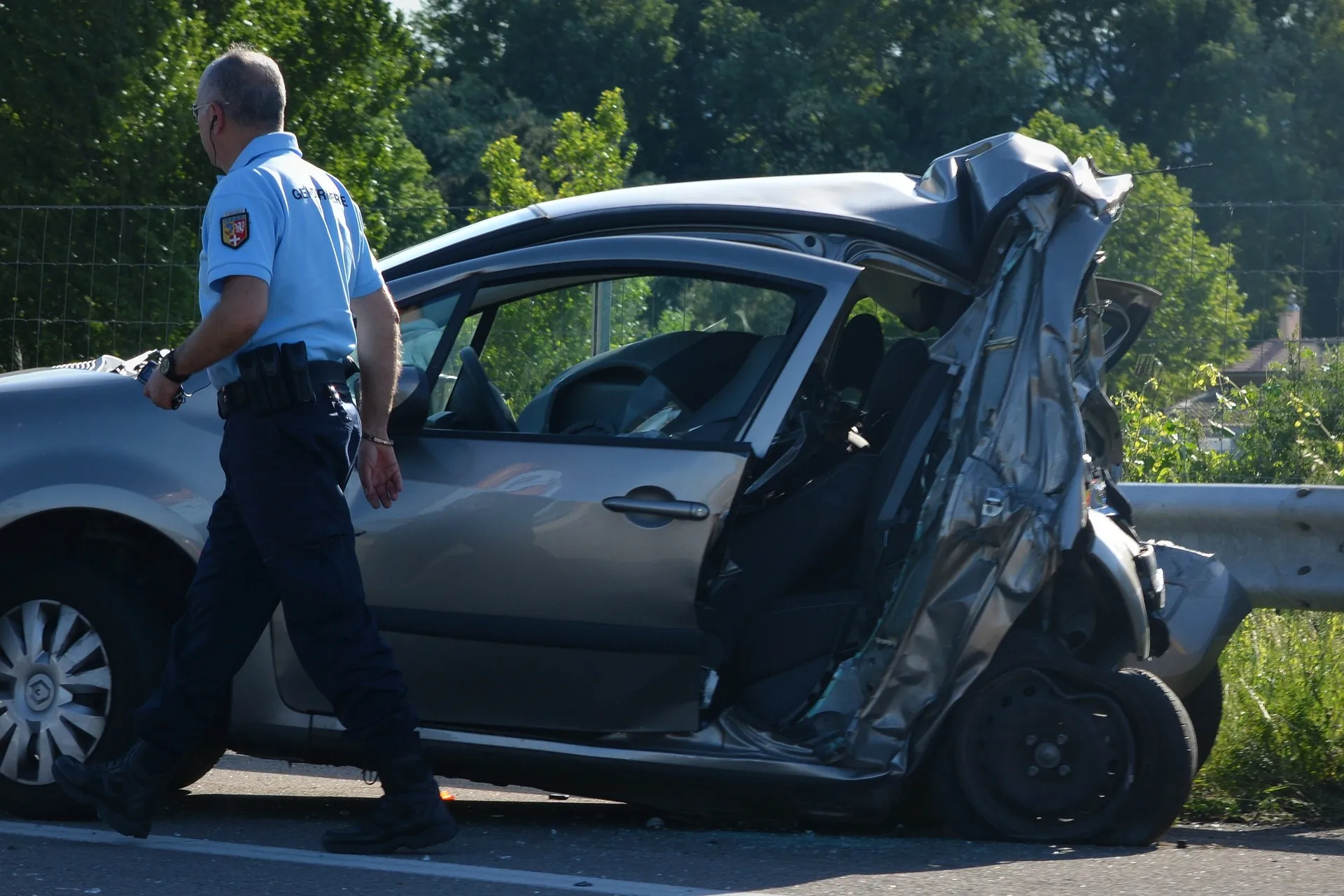

A car accident can change everything in an instant, and when someone else is hurt or killed, the legal consequences can feel just as devastating as the crash itself. If you or someone you love has been charged with Criminal Vehicular Operations (CVO) or Criminal Vehicular Homicide (CVH) in Minnesota, you are likely facing fear, confusion, and an uncertain future.
These are serious felony charges that can result in years in prison, thousands of dollars in fines, and the long-term loss of your driver's license. But being charged is not the same as being convicted. Understanding the charges against you, and acting quickly to secure experienced legal representation is the most important step you can take right now.
Minnesota Criminal Vehicular Charges at a Glance
Minnesota criminal vehicular offenses are grouped into four levels of severity, based on the degree of harm caused. The table below summarizes each level and its maximum penalties.
| Charge Level | Max Prison | Max Fine |
|---|---|---|
| Gross Misdemeanor CVO (Bodily Harm) | 1 year (local jail) | $3,000 |
| Felony CVO – Substantial Bodily Harm | 3 years | $10,000 |
| Felony CVO – Great Bodily Harm | 5 years | $10,000 |
| Criminal Vehicular Homicide | 15 years | $20,000 |
Penalties above reflect statutory maximums. Actual sentences depend on prior record, specific circumstances, and other factors. License revocation is imposed separately and can extend beyond any prison term.
What Prosecutors Must Prove: The CVO/CVH Elements
Regardless of the charge level, from gross misdemeanor through criminal vehicular homicide, prosecutors must prove that the driver caused harm while operating a motor vehicle in one or more of the following ways:
- Grossly negligent driving — operating a vehicle with a reckless disregard for the safety of others.
- Impaired driving— driving while under the influence of alcohol, a controlled substance, or any combination of the two.
- Driving at or above the legal alcohol limit — a blood alcohol concentration (BAC) of 0.08 or higher.
- Driving with a BAC of 0.08 or higher as measured within two hours of driving.
- Driving while knowingly under the influence of a hazardous substance.
- Driving with a Schedule I or II controlled substance in the body — excluding marijuana or tetrahydrocannabinols.
- Leaving the scene of the accident — also known as a hit-and-run.
- Driving a vehicle with a known, uncorrected mechanical defect — where the driver had been warned of the defect, failed to fix it, and the defect caused the injury.
What changes between the four charge levels is not the elements, it is the severity of harm caused by the driver's conduct.
The Four Levels of Criminal Vehicular Charges in Minnesota
Level 1: Gross Misdemeanor CVO — Bodily Harm
The least severe criminal vehicular charge applies when a driver causes bodily harm to another person while driving in one of the ways listed above. Even at this level, the consequences are significant: a conviction can result in up to one year in jail and a fine of up to $3,000.
Bodily harm means any physical pain, injury, illness, or impairment of physical condition, including injuries that may appear minor.
Level 2: Felony CVO — Substantial Bodily Harm
When the same conduct results in substantial bodily harm, the charge becomes a felony. A conviction at this level carries up to three years in prison and a fine of up to $10,000.
Substantial bodily harm means a temporary but significant disfigurement, a temporary but significant loss or impairment of the function of a body part or organ, or a bone fracture.
Level 3: Felony CVO — Great Bodily Harm
When the driver's conduct results in great bodily harm, the felony charge escalates further, with a maximum sentence of five years in prison and a fine of up to $10,000. If the injury occurs to an unborn child, the charge is treated at this same level.
Great bodily harm means an injury that creates a high probability of death, causes serious permanent disfigurement, or results in the permanent or prolonged loss or impairment of the function of a body part or organ.
Level 4: Criminal Vehicular Homicide
Criminal Vehicular Homicide is the most serious charge in this category. It applies when a driver causes the death of another person or an unborn child through conduct meeting one or more of the CVO/CVH elements listed above — in circumstances that do not rise to the level of murder or manslaughter.
A conviction for Criminal Vehicular Homicide can result in up to 15 years in prison and a fine of up to $20,000.
"Being charged is not the same as being convicted."
Potential Defenses: What Your Attorney May Be Able to Argue
Affirmative Defense: Lawful Use of a Prescribed Controlled Substance
If you were taking a controlled substance under a valid prescription and using it exactly as directed by your physician, that may serve as an affirmative defense to a CVO or CVH charge. This means your attorney can challenge the charge on the basis that you had a legal prescription and were following medical guidance.
Important: The burden of proving this defense falls on you, the defendant. Your attorney will need to demonstrate that a valid prescription existed and that you were complying with your doctor's directions. This is one of several reasons why having skilled legal counsel from the beginning of your case is critical.
Other Defense Strategies Your Attorney May Pursue
- Challenging the accuracy of BAC test results or the procedures used to administer them
- Challenging the causal connection between your driving conduct and the harm caused
- Examining whether law enforcement followed proper procedures during the stop, arrest, or investigation
- Reviewing whether the evidence was lawfully obtained or is subject to suppression
- Identifying whether the degree of harm alleged meets the legal threshold for the charge filed
Every case is different. An experienced criminal defense attorney will examine the specific facts of your situation to identify every viable defense and develop a strategy tailored to your circumstances.
Driver's License Cancelation for Criminal Vehicular Crimes
If you are convicted of a criminal vehicular crime, your driver's license will be canceled and you will be placed on the Ignition Interlock Device Program (IIDP). Participation in the IIDP is mandatory, and treatment is required. The length of the cancelation period depends on the severity of the offense and the number of prior criminal vehicular convictions over your lifetime, not just within a recent lookback window.
Criminal Vehicular Operation (CVO)
| Offense (Lifetime) | Bodily Harm or Substantial Bodily Harm | Great Bodily Harm |
|---|---|---|
| 1st Offense | 2 years | 6 years |
| 2nd Offense | 5 years | 8 years |
| 3rd Offense | 8 years | 10 years |
| 4th Offense | 10 years | 10 years |
License revocation is a civil administrative consequence separate from criminal sentencing. Your attorney may be able to challenge or seek review of the revocation through administrative proceedings.
"A criminal vehicular conviction does not just affect your freedom and finances — it can also result in the revocation of your driver's license for years."
Facing These Charges? Bruno Law Is Ready to Help
Criminal vehicular charges carry consequences that can follow you for the rest of your life: prison time, financial penalties, and the loss of your license and livelihood. You deserve an attorney who understands exactly what you are facing and has the experience to fight for the best possible outcome.
Bruno Law's criminal defense team has significant experience defending clients against Minnesota's most serious criminal charges, including Criminal Vehicular Operations and Criminal Vehicular Homicide. We have achieved successful outcomes in cases that other attorneys considered unwinnable.
Request an initial consultation today. We will review your case, explain your options clearly, and help you understand what comes next. You do not have to face this alone.